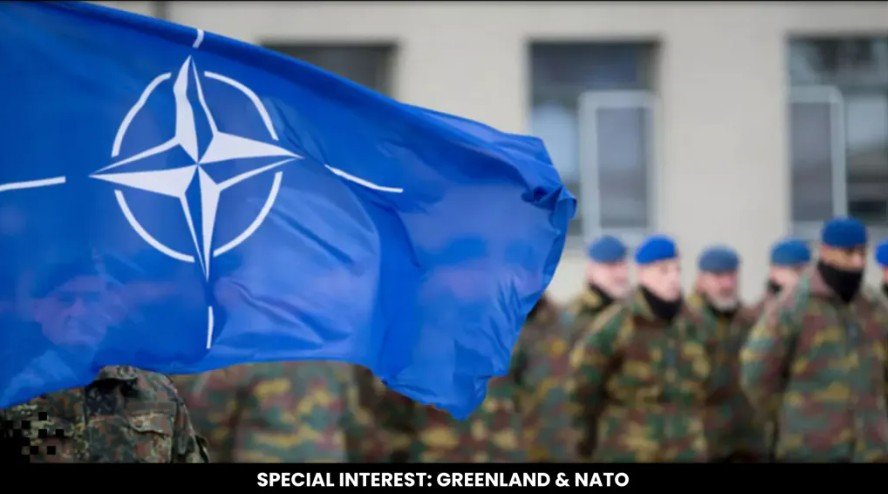
President Donald Trump has advanced a renewed Arctic security push focused on Greenland, arguing the island’s position along North Atlantic–Arctic corridors is critical for early warning, missile tracking, and limiting Russian and Chinese military and economic influence in the High North. The United States already maintains a long-standing presence under the 1951 U.S.–Denmark Defense of Greenland agreement, updated in 2004, centered on Pituffik Space Base (formerly Thule), and Trump’s stated objective is to expand U.S. and NATO access within existing treaty frameworks rather than pursue any transfer of sovereignty. At the World Economic Forum in Davos in January 2026, Trump met with NATO Secretary General Mark Rutte and publicly described a “framework of a future deal” on Greenland and Arctic security, while acknowledging that negotiations remain ongoing and that final terms have not been finalized. Trump claimed the framework would allow broad, long-term U.S. security access and referenced possible U.S. investments in infrastructure and missile-defense capabilities, often described by his administration as part of a “Golden Dome” concept.
As part of the negotiating pressure, Trump threatened tariffs on European allies aligned with Denmark and Greenland, then withdrew those threats following the Davos discussions, framing the move as evidence of progress toward a security arrangement. NATO officials and European governments have since emphasized that no binding agreement has been signed and that discussions remain preliminary. Denmark and Greenland have reiterated that sovereignty is non-negotiable and that Greenland’s elected government must be directly involved in any changes, while signaling continued openness to updating defense cooperation to address evolving Arctic security risks. Overall, the situation remains an active but unresolved negotiation over expanding U.S. and NATO military access and coordination in Greenland under existing agreements, with Washington projecting momentum and European partners stressing process, consent, and legal limits.
What changed
In January 2026, Donald Trump stated that the United States and NATO had discussed a preliminary framework to expand U.S. and NATO security access and cooperation in Greenland under existing defense agreements. NATO officials, Mark Rutte, Denmark, and Greenland confirmed that no binding agreement has been signed and that negotiations remain ongoing.
Why this matters
This development signals a potential expansion of U.S. and NATO military activity in the Arctic, which could affect regulatory conditions, infrastructure investment timelines, and geopolitical risk assumptions for businesses with exposure to Arctic logistics, defense-adjacent supply chains, or transatlantic trade policy.
Why you’re seeing this
This development crossed the strategic relevance threshold due to public confirmation of an active but unresolved negotiation that could alter long-term security posture and economic conditions in the Arctic region.
Exposure concentration
- Defense and aerospace
- Arctic logistics and shipping
- Energy and infrastructure development
- General market volatility
Risk classification
Risk type: Strategic
This risk could influence long-term business decisions such as where you operate, who you sell to, or how you position your company as external conditions evolve.
Time horizon: Medium-term
Any meaningful effects are expected to emerge gradually over the coming months rather than immediately, giving some lead time to observe and adjust.
Volatility: Moderate
The situation may change direction as negotiations and political signals evolve, but shifts are likely to be incremental rather than sudden or chaotic.
Primary impact surface
Processes
This risk could affect how your business operates day to day, including compliance steps, vendor relationships, logistics, or internal decision workflows.
Product
This risk could influence what you sell or how it is delivered, such as product availability, pricing assumptions, feature requirements, or customer expectations.
Recommended posture
Monitor
No action is required at this time. Faith in Policy will continue monitoring.
Monitoring status
Faith in Policy will continue monitoring this development and reassess if decision relevance changes.